Steel fabrication demands precision at every step. A small mistake at the drawing stage can lead to wrong cuts, wrong welds, or site delays. Steel shop drawings act as the control layer between design intent and fabrication reality. They guide fabricators with exact instructions. They also remove guesswork from the process. This clarity directly reduces fabrication errors.
Below is a detailed breakdown of how steel shop drawings help fabricators achieve accuracy and consistency.
Clear Translation of Design Intent
Structural design drawings focus on engineering intent. They do not focus on fabrication logic. Fabricators need more detail than what design drawings provide.
Steel shop drawings translate design intent into fabrication-ready information. They show exact member sizes, profiles, and grades. They also show how each piece connects to another piece. This translation avoids wrong assumptions on the shop floor.
Fabricators no longer interpret vague notes. They follow clear instructions. This reduces human error during cutting, drilling, and welding.
Accurate Member Dimensions and Geometry
Fabrication errors often come from incorrect dimensions. Even a small mismatch can affect the full assembly.
Steel shop drawings provide exact lengths, angles, and slopes. They include true dimensions rather than scaled values. They also show camber requirements and tolerance limits.
This accuracy ensures that members fit as planned during trial assembly and site erection. Rework reduces sharply when geometry is correct from the start.
Detailed Connection Information
Connections are the most error-prone part of steel fabrication. Missing or unclear connection details cause frequent shop issues.
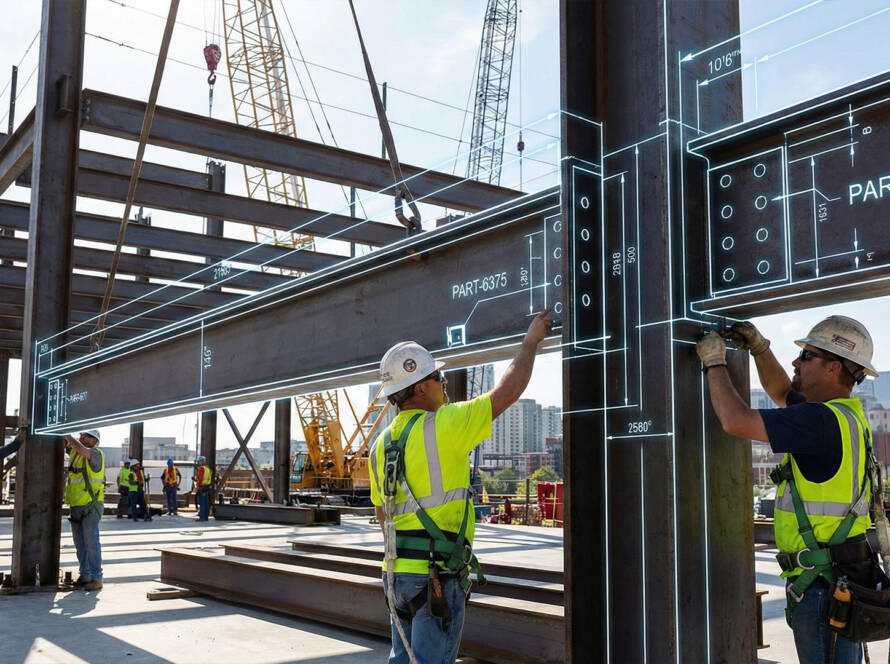
Shop drawings show bolt sizes, bolt grades, and bolt spacing. They also show weld type, weld size, and weld length. Plate thickness and edge distances stay clearly marked.
Fabricators know exactly where to drill and where to weld. This removes trial-and-error work. It also prevents weak or non-compliant connections.
Pro Tip: Always review connection details with the fabricator before approval. Fabrication logic can differ from design logic.
Correct Material Specification Control
Wrong material use leads to costly scrap. It also leads to failed inspections. Steel shop drawings clearly mention steel grade for each member. They separate primary members from secondary members. They also note special coatings or fireproofing needs.
Fabricators can plan material procurement with confidence. They avoid mixing grades on the shop floor. This control reduces compliance issues and wastage.
Improved Part Identification and Marking
Large steel projects involve thousands of parts. Misidentification causes assembly errors. Shop drawings assign unique piece marks to each member. These marks align with the bill of materials and erection drawings. Each part becomes traceable from fabrication to site.
Fabricators label members correctly during production. Erectors receive the right parts in the right sequence. This systematic flow reduces handling mistakes.
Reduced Cutting and Drilling Errors
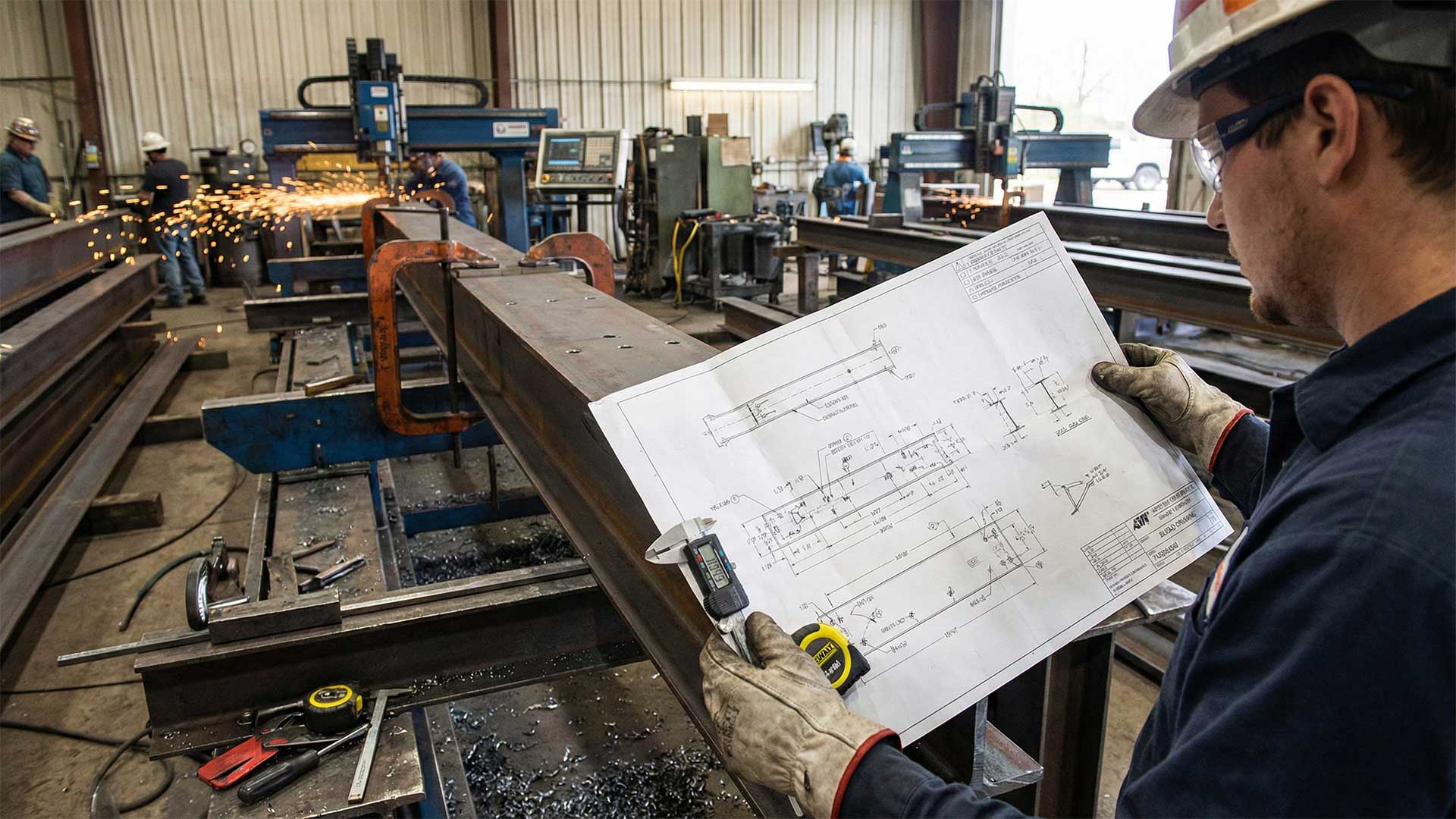
Cutting and drilling require precision machines. Machines still depend on correct input data. Steel shop drawings act as the source for CNC data. They define hole sizes, hole locations, and cut profiles. They also define cope dimensions and notch details. When drawings are accurate, CNC output stays accurate. Fabricators avoid misaligned holes and incorrect edge distances. This saves time and material.
Controlled Weld Planning
Welding errors weaken structural performance. They also increase repair time. Shop drawings define weld symbols clearly. They show whether welds are shop welds or field welds. They also show weld sequence where required.
Fabricators can plan weld operations better. They avoid over-welding or under-welding. Quality improves without increasing labor hours.
Pro Tip: Match weld symbols with applicable codes during shop drawing review. This avoids later inspection rejection.
Clash Prevention Before Fabrication
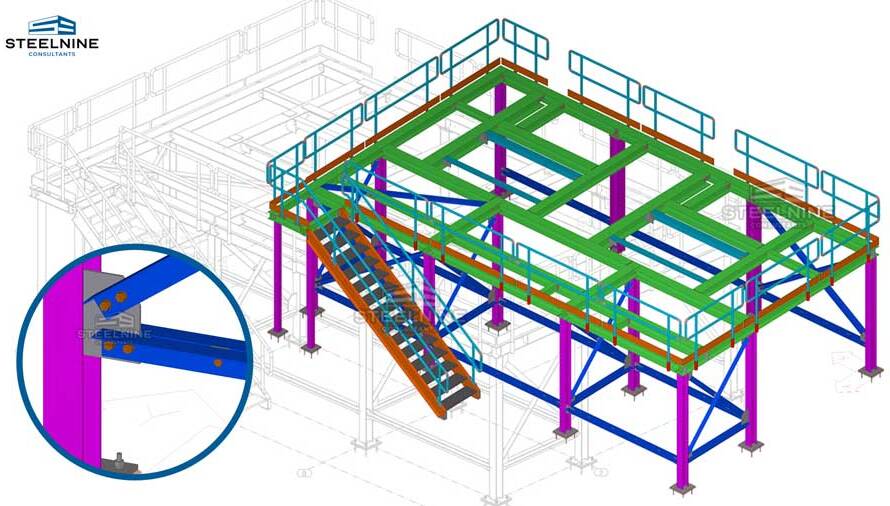
Steel often interacts with concrete, MEP systems, and façade elements. Unchecked clashes cause last-minute changes. Steel shop drawings are often created using BIM models. These models allow clash checks before fabrication starts. Conflicts get resolved digitally.
Fabricators receive updated drawings with resolved conflicts. They do not fabricate members that later require modification. This saves both time and cost.
Alignment with Fabrication Standards
Each fabrication shop follows internal standards. These include preferred connection types and tolerances. Shop drawings align design requirements with shop standards. They adapt details without changing structural intent. This alignment reduces fabrication difficulty. Fabricators work faster with familiar details. Errors drop because processes remain consistent.
Better Review and Approval Process
Errors reduce when drawings go through structured review. Steel shop drawings pass through internal checks. They also go through engineer and contractor review. Each review layer catches different issues. Problems get resolved before fabrication. Fixing errors on paper costs less than fixing steel. This preventive step improves overall quality.
Sequencing and Assembly Planning Support
Fabrication errors can occur due to poor sequencing. Incorrect sequence causes access issues and rework. Shop drawings support assembly planning. They show splice locations and lifting points. They also support sub-assembly planning. Fabricators know how parts come together. They fabricate with erection in mind. This reduces on-site corrections.
Reduced Dependency on Verbal Instructions
Verbal instructions create risk. Different people interpret words differently. Steel shop drawings act as the single source of truth. Fabricators rely on documented information. Supervisors reduce verbal clarifications. This consistency lowers misunderstanding across shifts and teams.
Better Coordination with Quality Control
Quality checks rely on documented criteria. Shop drawings provide measurable data. Inspectors can verify dimensions, welds, and bolt patterns against drawings. Discrepancies get identified early. Fabricators fix issues before shipping. Site teams receive compliant steel.
Minimized Rework and Scrap
Every fabrication error creates scrap or rework. Both increase cost. Accurate shop drawings reduce guesswork. Fabrication becomes predictable. Rework drops because parts fit correctly the first time. This efficiency improves profit margins and delivery timelines.
Strong Link Between Shop and Site
Fabrication errors often surface during erection. Shop drawings connect shop work with site conditions. They include erection notes and tolerances. They also align with erection drawings. Erectors face fewer surprises. Fabricated steel aligns with site reality. This smooth handoff reduces site modifications.
Key Takeaways
- Steel shop drawings convert design intent into fabrication-ready instructions
- Accurate dimensions reduce cutting and drilling mistakes
- Clear connection details prevent weak or incorrect joints
- Material specification control avoids grade mismatch
- Piece marking improves tracking and assembly accuracy
- CNC fabrication depends on correct shop drawing data
- Weld clarity improves strength and inspection success
- BIM-based shop drawings help resolve clashes early
- Review workflows catch errors before fabrication
- Reduced rework saves time, cost, and material
Steel shop drawings act as the backbone of error-free fabrication. Their accuracy directly shapes fabrication quality. Investing time in detailed and coordinated shop drawings leads to predictable outcomes and smoother project execution.