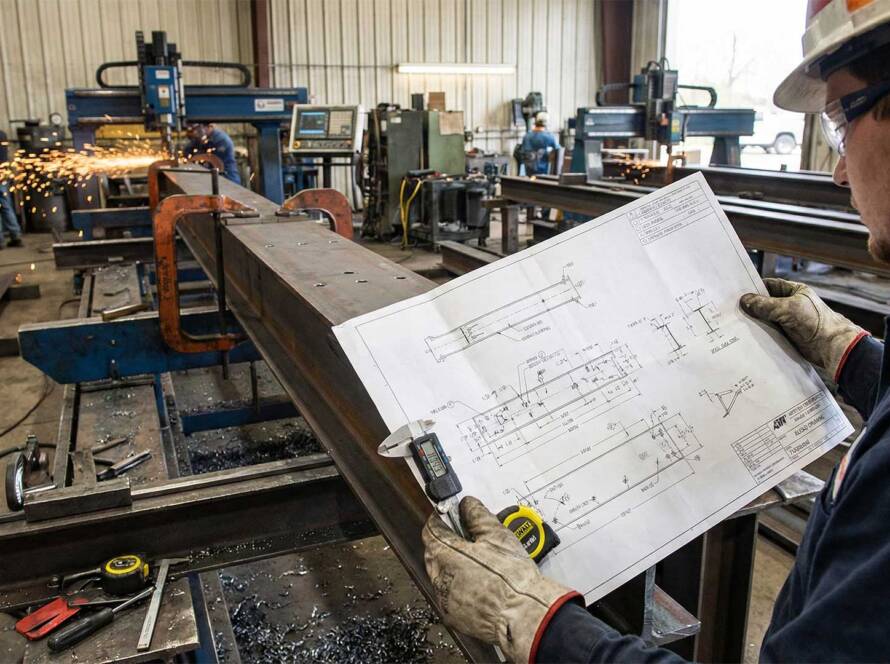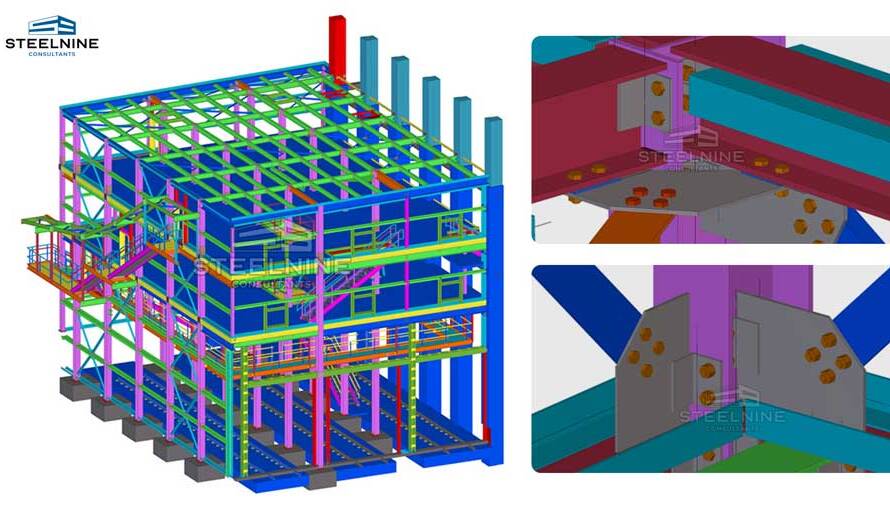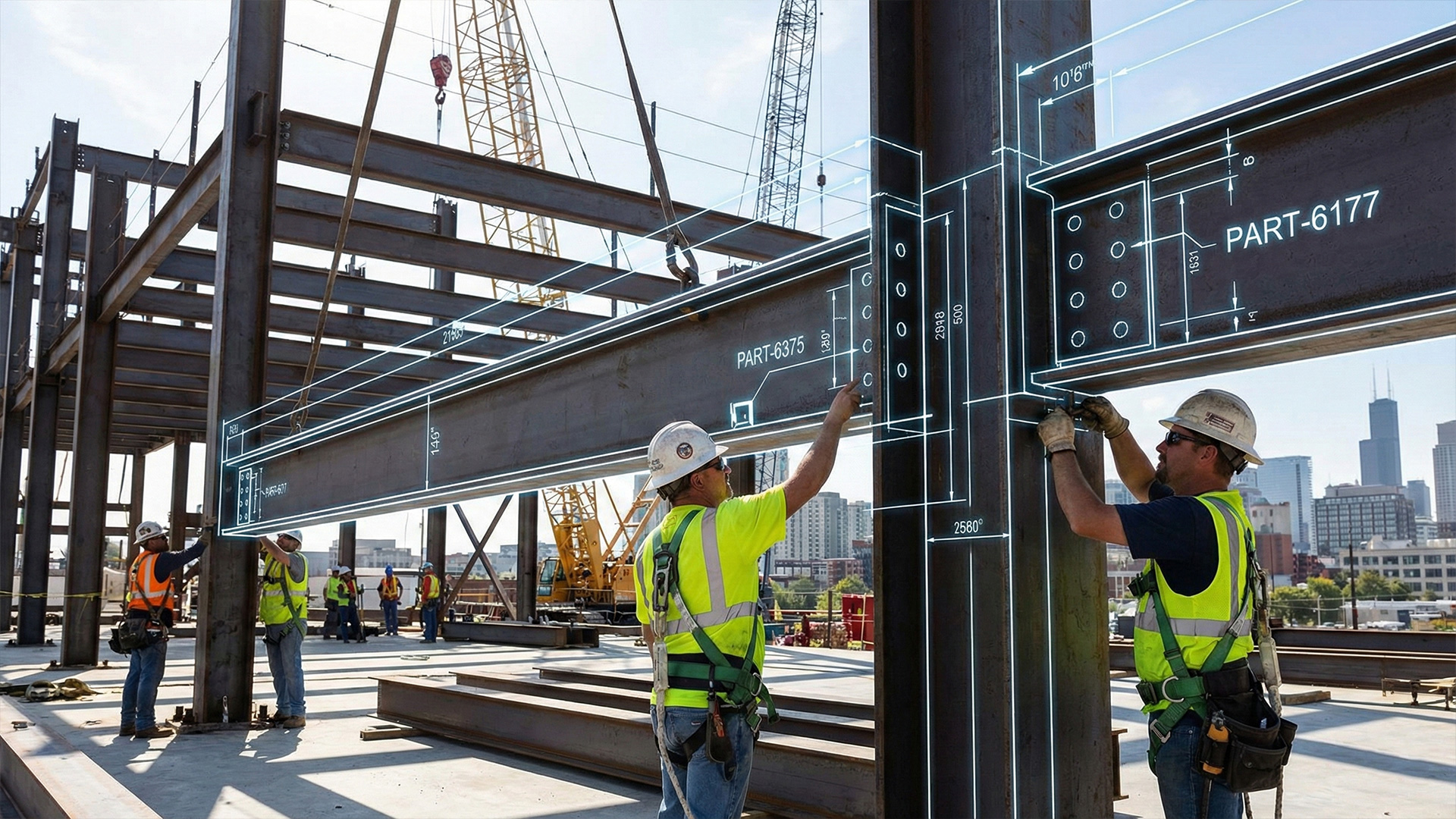
Steel installation carries high risk at every stage. Crews work at height. Heavy members move in limited space. Small mistakes create major safety threats. Erection drawings reduce these risks through clear planning and controlled execution. These drawings guide site teams step by step during steel erection. They turn design intent into safe site actions.
Erection drawings focus on sequence, stability, and access. They do not repeat design information. They show how steel elements come together on site. This clarity supports safer decisions before lifting begins. It also supports safer behavior during installation.
Clear Erection Sequence Reduces On-Site Hazards
Unsafe erection often starts with poor sequencing. Random installation creates unstable frames. Temporary imbalance causes collapse risk. Erection drawings define the exact order of steel placement.
The drawings show which columns go first. They show beam installation stages. They define when bracing must be installed. Crews follow a planned path instead of guessing.
Planned sequencing keeps the structure stable at every stage. Workers do not rely on temporary judgment. Supervisors track progress against a known safe sequence.
Pro Tip: Always review erection sequence drawings during toolbox talks. This practice aligns crew actions with safety intent.
Load Paths Stay Controlled During Installation
Steel members carry different loads during erection. These loads differ from final design loads. Unsafe load transfer leads to sudden movement or failure.
Erection drawings show temporary load paths. They highlight members that must carry weight early. They indicate when loads shift to permanent systems.
This guidance prevents overloading of incomplete frames. It also prevents removal of temporary supports too early.
Controlled load paths reduce risk of column buckling. They also reduce beam rotation during lifting.
Temporary Bracing Placement Improves Stability
Temporary bracing plays a major role in erection safety. Missing or delayed bracing creates instability. Many site accidents trace back to poor bracing control.
Erection drawings clearly show bracing locations. They define bracing type. They define installation timing. Crews know where to install braces. Crews know when removal is allowed. This clarity avoids unsafe assumptions.
Bracing details also support wind safety. Partially erected steel reacts strongly to wind forces. Proper bracing reduces sway and vibration.
Crane Operations Become Safer With Defined Lifts
Crane safety depends on planning. Unclear lift plans cause rushed decisions. This increases collision and drop risk.
Erection drawings support crane planning. They define member weights. They show lift points. They show swing paths and placement zones. Operators understand lift limits. Riggers understand connection timing. Ground crews stay clear of danger zones.
Defined lifts reduce rehandling. Fewer adjustments reduce exposure time under suspended loads.
Pro Tip: Match erection drawings with crane charts before site mobilization. Resolve conflicts early.
Connection Safety Improves Through Detailed Guidance
Unsafe connections cause many steel erection injuries. Improper bolt installation leads to sudden release. Missing bolts reduce joint stability.
Erection drawings specify connection type. They show bolt quantity. They define bolt installation stage. Crews know when snug-tight is enough. Crews know when final torque applies. Inspectors verify each stage with confidence.
The drawings also highlight temporary connections. These temporary joints support alignment while maintaining safety.
Fall Protection Planning Becomes More Effective
Steel erection involves work at height. Fall risk remains one of the highest hazards. Generic safety plans often fail to address real site conditions. Erection drawings support fall protection planning. They show work zones. They show access points. They show connection locations.
Safety teams plan anchor points based on drawing data. Crews know where to tie off. They also know where walking surfaces exist. Clear planning reduces improvisation. Improvisation often leads to unsafe shortcuts.
Access and Egress Routes Stay Organized
Poor access increases risk of slips and falls. Unplanned climbing leads to fatigue and injury. Erection drawings define access routes. They show ladder locations. They show temporary platforms. They show working elevations. Workers move efficiently. They avoid unstable paths. Emergency egress remains available at all stages. Organized access improves productivity and safety together.
Clash-Free Installation Reduces Rework Risk
Rework creates unsafe conditions. Cutting steel on site introduces sparks and sharp edges. Forced fitting increases strain injuries.
Erection drawings coordinate steel placement with other trades. They reflect resolved clashes. They guide correct alignment.
Crews install steel once. They avoid unsafe modifications. They avoid rushed fixes at height. This accuracy reduces exposure to avoidable hazards.
Inspection and Quality Checks Become Structured
Safety improves when inspections follow structure. Random checks miss critical risks.
Erection drawings support inspection planning. Inspectors know what to check at each stage. They verify alignment. They verify bracing. They verify connections.
Structured inspections catch issues early. Early correction avoids unsafe continuation.
Quality and safety move together during erection.
Communication Gaps Reduce Across Teams
Steel erection involves many roles. Engineers, supervisors, riggers, and operators must align.
Erection drawings serve as a shared reference. Everyone works from the same plan. Verbal instructions become clearer.
Miscommunication drops. Confusion drops. Safety improves.
Clear drawings reduce dependence on memory and assumption.
Weather Risk Management Improves
Weather impacts steel erection heavily. Wind affects stability. Rain affects footing.
Erection drawings help plan safe stoppage points. Teams know where to pause work safely. They know which members need bracing before shutdown.
This planning prevents partially stable conditions during weather changes.
Reduced Stress Leads to Safer Behavior
Unclear work creates stress. Stress leads to mistakes. Mistakes cause accidents.
Erection drawings reduce uncertainty. Workers trust the plan. They focus on execution.
Calm crews act safer. Organized work environments reduce risk.
Compliance With Safety Standards Becomes Easier
Safety regulations require planning. Authorities expect documented erection methods.
Erection drawings support compliance. They show planned stability. They show safety measures.
Audits become smoother. Site teams avoid last-minute fixes.
Compliance also protects contractors from liability.
Key Takeaway
- Erection drawings define safe steel installation sequence
- Controlled load paths reduce collapse risk
- Temporary bracing guidance improves frame stability
- Planned crane lifts lower handling hazards
- Clear connection details prevent joint failure
- Fall protection planning becomes practical
- Organized access routes reduce slips and fatigue
- Clash-free installation avoids unsafe rework
- Structured inspections improve early risk control
- Clear visuals strengthen safety communication
Erection drawings do more than guide steel placement. They shape safe behavior across the site. They turn planning into protection.